
𝗧𝗵𝗲 𝗟𝗼𝘄𝗲𝘀𝘁 𝗕𝗶𝗱 𝗜𝘀 𝗦𝗼𝗺𝗲𝘁𝗶𝗺𝗲𝘀 𝘁𝗵𝗲 𝗠𝗼𝘀𝘁 𝗘𝘅𝗽𝗲𝗻𝘀𝗶𝘃𝗲 𝗕𝗶𝗱
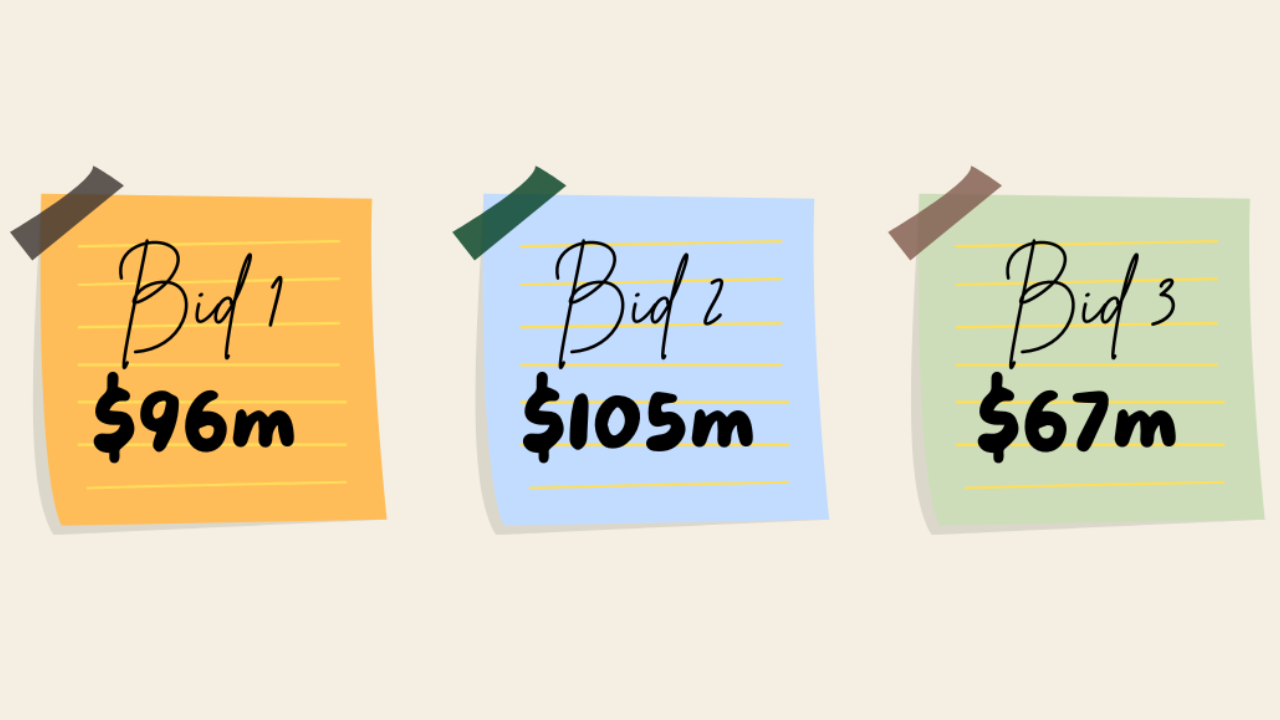
Imagine that you receive three technically compliant bids for a project. Two are reasonably close at $96 million and $105 million, while the third comes in at $67 million.
Which one should make you most curious?
The temptation is to see the $67 million bid as an opportunity because, if the bidders have been given the same scope and are offering substantially the same deliverable, why pay $96 million for something somebody is willing to provide for $67 million?
The problem is that a bid is not merely a price. It is also a contractor's interpretation of the project expressed in monetary terms, because embedded within that number are assumptions about scope, productivity, schedule, risk and the conditions under which the work will be executed.
This is why an unusually low bid should provoke investigation rather than celebration.
If several competent contractors independently study the same reasonably well-defined scope and arrive within a similar range, while another arrives substantially below them, there must be a reason. Perhaps the lower bidder genuinely has a technological, commercial or execution advantage, in which case the owner may have discovered something valuable. But perhaps the contractor has misunderstood the scope, underestimated a major risk or priced aggressively simply to secure the work.
The distinction matters because awarding the contract does not make the missing cost disappear. If the contractor later discovers that the project cannot be delivered for the amount bid, the commercial incentives change, and what appeared during tender evaluation as a saving can reappear during execution through claims, disputes, reduced resources, schedule pressure or compromised quality.
This is particularly important with lump-sum contracts because transferring a risk contractually does not make the underlying uncertainty disappear. A contractor can accept responsibility for a risk on paper while still being financially incapable of absorbing its consequences when it materialises.
None of this means that the lowest bid should be rejected simply because it is low. That would be as irrational as accepting it simply because it is low.
The better question is why it is low.
Sometimes the lowest bidder really has found a better way to execute the work, and sometimes the gap is telling you that the bidder sees a different project from the one you think you are asking them to build.
The difficult part is finding out which one it is before signing the contract.
